 New Arrival
 Mobile Phones
 Tablets
 Laptop
 TV
TV Accessories
 Kitchen Appliances
 Refrigerators
 Washing machines
 Air Conditioners
 Personal Care
 Home Automation
 Crockery
 Pressure Cookers
 Induction Cooktops
 Electric Kettles
  Air Fryer
 Chopper
 Wet Grinders
 Chimney
 Dish Washers
 Hand Blenders
 Ovens / Toasters /Grillers
 Gas Stoves
 Pots & Pans
 food-processor
 Dining-and-serveware
 Electric-cookers
 Fans
Fans Irons
Irons Water Heaters
 Water Purifier
 Air Coolers
 Vacuum Cleaners
 Sewing Machines
 Voltage Stabilizers
 Inverters
 Emergency Lights
 Water Dispenser
 Air Purifier
 Torch
Torch Mobile Accessories
 Smart Wearables
 Speakers
 Computer Accessories
 Camera Accessories
 Gaming & Accessories
 Entertainments
 Graphics Cards
 Microphone
 Car & Bike Essentials
 Power Banks
 Connectors
 Memory Cards
 Mobile Chargers & Cables
 Mobile Holders
 Smart Bands
 Sound Bars
 Home Theatres
 Portable/Trolley Speakers
 External Hard Disks
 Pendrives
 Mouse
Mouse Keyboards
 Web Cams
 USB Hubs
 Printers
 Monitor
 Network components
 Laptop-Tables
 Tripods
 Gaming Consoles
 TV Streaming Devices
 Smart Assistants
 FM Radio
 Shavers
 Hair Dryers
 Hair Straighteners
 Perfume
 Electric Toothbrush
 Projectors
 Smart Security Accessories
 Wi-Fi Camera
1 Ton vs 1.5 Ton AC: Which Size Should You Actually Buy?
Confused between a 1 Ton and 1.5 Ton AC? This practical guide helps you choose the right size based on your room, usage, and real-world conditions. Learn how AC tonnage works, estimate your electricity costs, and discover the best AC brands in India for long-term comfort and efficiency
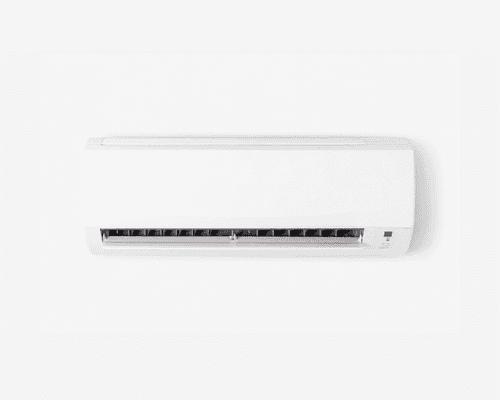
Buying an AC is one of those decisions that follows you for 10 years. Get the size right and it cools your room beautifully, keeps your electricity bill in check, and runs quietly in the background without you ever thinking about it. Get it wrong and you're either sweating in a room that never quite cools down, or shivering next to an oversized machine that ices the space too fast and leaves the air feeling damp.
The good news: figuring out the right size is simpler than most people think. This guide walks you through a room-by-room AC tonnage calculator, explains exactly which AC ton is best for your bedroom and living room, and helps you pick from the best air conditioner brands in India — without the sales pitch.
What Is AC Tonnage and Why Does It Matter?
When people say '1 ton AC' or '1.5 ton AC,' they're not talking about weight. Tonnage is a measure of how much heat the AC can pull out of a room per hour. One ton equals roughly 3,500 watts of cooling power per hour. Think of it this way: a 1 ton AC is like a single powerful fan pulling heat out of the room, while a 1.5 ton AC is 50% stronger. In a small room, the stronger one finishes the job too quickly which sounds good but actually creates problems. In a large room, the weaker one never quite catches up.
AC Tonnage Calculator: Find the Right Size for Every Room
Use this simple formula that HVAC professionals use across India:
Formula: Room Length (ft) × Room Width (ft) ÷ 600 = Tonnage needed
For example: a room that is 12 ft × 12 ft = 144 sq ft ÷ 600 = 0.24 → round up to 1 Ton.
Now use the room-by-room table below to find your starting point then adjust using the factors listed underneath:
| Room Type | Room Size (sq ft) | Recommended Tonnage | Why This Works |
| Compact Bedroom | Up to 100 sq ft | 0.75 Ton | Small space cools fast; lower tonnage saves power |
| Standard Single Bedroom | 100 – 150 sq ft | 1 Ton | Perfect match; efficient and whisper-quiet at night |
| Large / Master Bedroom | 150 – 200 sq ft | 1.5 Ton | Most Indian master bedrooms fall here |
| Small Living Room | 150 – 200 sq ft | 1.5 Ton | Open layout adds heat load; accounts for occupancy |
| Medium Living Room | 200 – 250 sq ft | 1.5 – 2 Ton | Depends on sun exposure and number of people |
| Large Hall / Drawing Room | 250 – 350 sq ft | 2 Ton | Single unit or two 1 Ton units may both work |
| Home Office / Study | 100 – 150 sq ft | 1 Ton | One or two people; lower heat load than bedroom |
| Kitchen-Adjacent Room | Any size | Add 0.25 Ton | Kitchen heat always spills into adjacent spaces |
Now Adjust for Your Specific Situation
The table above gives you the baseline. Add tonnage based on these real-world factors that most online guides forget to mention:
- Top floor or terrace-facing room: always add 0.5 ton. The roof absorbs enormous heat all day.
- South or west-facing windows: add 0.25 ton. Afternoon sun is brutal in Indian summers.
- More than 3 people regularly in the room: add 0.25 ton. Each person adds about 100 watts of body heat.
- Ceiling higher than 10 feet: move up to the next tonnage size entirely.
- Large glass windows with no curtains or heat film: add 0.25 ton.
- Well-insulated room with false ceiling: you may be able to go 0.25 ton lower than standard.
Which AC Ton Is Best for Bedroom? A Direct Answer
This is the most common question people search before buying, and the answer depends entirely on your bedroom size. Here is the most honest breakdown you'll find:
Bedroom Up to 130 sq ft — 1 Ton Is Your Answer
The typical single bedroom in an Indian apartment sits between 100 and 130 square feet. A 1 ton split AC is the ideal match. It cools the room to your preferred temperature quickly, maintains it without working too hard, and runs quietly enough that it won't disturb your sleep.
Another benefit that most buyers don't think about: a 1 ton unit is easier on your electricity meter during summer nights which is when you'll be using it the most. Over a five-year period, the power savings add up to a meaningful amount.
Bedroom Between 130 – 200 sq ft — 1.5 Ton Is the Right Fit
A master bedroom, a guest room with a balcony door that stays open, or any bedroom with a south or west-facing wall will struggle with a 1 ton unit. The compressor works overtime to compensate, your electricity bill goes up, and the room temperature still fluctuates more than it should.
A 1.5 ton AC for a room in this size range simply works better. It reaches your set temperature faster, cycles less frequently, and maintains comfort more consistently especially during peak summer afternoons when the outside temperature crosses 40°C.
The Grey Zone: 130 – 150 sq ft
If your bedroom falls between 130 and 150 sq ft which many Indian bedrooms do you're in the overlap zone. Here's how to decide: if the room faces north or east and is on a lower floor, a 1 ton AC will manage fine. If it faces south or west, or is on the top floor, go with 1.5 ton without hesitation.
1 Ton vs 1.5 Ton: Side-by-Side Comparison
Here's everything that matters, laid out plainly: 150 – 250 sq ft
| What to Compare | 1 Ton AC | 1.5 Ton AC |
| Ideal Room Size | Up to 100 sq ft | 150 - 250 sq ft |
| Cooling Speed | Steady — perfect for small spaces | Faster — better for larger or hotter rooms |
| Power Consumption | Around 900–1,000 watts/hr | Around 1,400–1,600 watts/hr |
| Best Suited For | Bedroom, study, small rooms | Master bedroom, living room, hot climates |
| Noise Level | Quieter — smaller compressor | Slightly more audible |
| Monthly Bill | Lower — runs efficiently in right room | Higher — but correct for larger rooms |
| If Used in Wrong-Sized Room | Runs non-stop; bill rises sharply | Short-cycles; room feels cold-damp |
| Compressor Life | Longer when correctly sized | Longer when correctly sized |
| Star Rating Impact | Every star saves noticeably more | Every star saves noticeably more |
How Much Will It Actually Cost to Run? (Monthly Electricity Guide)
Before buying, it helps to understand what your electricity bill will look like. The numbers below are based on 8 hours of daily use which is realistic for Indian summer usage at a rate of ₹7 per unit, which is close to the national average for residential consumers.
| AC Configuration | Power Draw | Units per Day (8 hrs) |
| 1 Ton — 3 Star | ~1,000 watts | 8 units |
| 1 Ton — 5 Star Inverter | ~750–800 watts | 6–6.4 units |
| 1.5 Ton — 3 Star | ~1,500 watts | 12 units |
| 1.5 Ton — 5 Star Inverter | ~1,100–1,200 watts | 8.8–9.6 units |
| Undersized AC (overworking) | Runs non-stop above rated draw | 10–14 units |
| Oversized AC (short-cycling) | Spikes on startup repeatedly | 10–13 units |
The last two rows tell the real story. An incorrectly sized AC whether too big or too small consumes more electricity than a correctly sized unit of the same star rating. You pay the size penalty every single month, for the entire life of the appliance.
And the difference between a 3-star and a 5-star inverter unit on the same tonnage? Over a full five-year summer period, the 5-star inverter saves you a meaningful amount often enough to more than recover the slightly higher purchase cost of the better-rated model.
Best Air Conditioner Brands in India — Who Should You Actually Trust?
India's AC market has matured significantly. Most major brands now offer reliable products but they differ meaningfully in compressor technology, after-sales service, performance in extreme heat, noise levels, and long-term durability. Here is an honest assessment of the best air conditioner brands available in India right now:
1. Daikin — The Most Trusted Name for Long-Term Reliability
Daikin is Japanese engineering at its most consistent. If you ask any HVAC installer which brand gives them the fewest callbacks, Daikin comes up most often. The compressors are built to last, the inverter technology is exceptionally efficient, and the after-sales network has improved significantly across India over the past five years.
Daikin is not always the flashiest option or the one with the most features. But it is the one that will quietly do its job for 12–15 years with minimal intervention which is exactly what most households want from an AC.
- Best for: Buyers who prioritise long-term reliability over features, and don't want to think about their AC after installation.
- Standout feature: Industry-leading inverter compressor efficiency and compressor longevity.
- Worth knowing: Service response times vary by city excellent in metros, variable in smaller towns.
2. Voltas — The Most Popular Brand in India for Good Reason
Voltas, backed by the Tata Group, has been the highest-selling AC brand in India for years. The reason is straightforward: it delivers solid performance at competitive price points, and its service network covers more cities and towns than almost any other brand. If something goes wrong, you're not waiting weeks for a technician.
For first-time AC buyers, or anyone who lives outside a major metro, Voltas offers the best combination of performance and peace of mind. The after-sales experience is consistently one of the strongest in the industry.
- Best for: First-time buyers, Tier 2 and Tier 3 city residents, and anyone who values service availability over premium features.
- Standout feature: The widest service network in India critical when your AC needs attention during peak summer.
- Worth knowing: Performs exceptionally well in hot, dry conditions common across northern and western India.
3. LG — Best Choice for Features and Smart Home Users
LG's Dual Inverter compressor technology is genuinely impressive; it adjusts cooling capacity across a wide range, which means faster cooling when the room is hot and more efficient maintenance once the temperature is reached. LG ACs also come with some of the best smart features in the segment: Wi-Fi control, auto-clean evaporator, and AI-based temperature sensing.
If you're the kind of person who controls everything from your phone and appreciates a well-designed interface, LG is the natural choice. The build quality is solid, and energy efficiency ratings on their 5-star models are among the best in the market.
- Best for: Smart home users, tech-forward buyers, and households where energy efficiency is a top priority.
- Standout feature: Dual Inverter compressor with a wide operating range and excellent Wi-Fi app control.
- Worth knowing: Service quality can vary by city; check local service centre reviews before buying.
4. Samsung — Premium Build Quality with an Outstanding Warranty
Samsung brings the same attention to design and build quality that defines its other electronics into the AC segment. Their Wind-Free cooling technology which disperses cool air through thousands of micro-holes rather than a direct blast creates a noticeably more comfortable cooling experience. The Digital Inverter compressor comes with a 10-year warranty, which is among the best in the industry.
Samsung ACs look premium, perform well, and hold up over time. They're a particularly good choice for living rooms and bedrooms where aesthetics matter alongside performance.
- Best for: Buyers who want premium design, draft-free cooling, and one of the longest compressor warranties available.
- Standout feature: Wind-Free cooling and 10-year Digital Inverter compressor warranty.
- Worth knowing: Slightly fewer service centres than Voltas or LG in smaller cities.
5. Blue Star — The Professional's Choice for Extreme Indian Summers
Blue Star started as a commercial HVAC brand before entering the residential market, and that heritage shows. Their residential ACs are built to operate reliably in extreme temperatures — up to 54°C ambient temperature which is a genuine differentiator for households in Delhi, Rajasthan, Gujarat, and coastal Andhra Pradesh where summer temperatures regularly break 45°C.
If you live somewhere that experiences brutal, prolonged summers and want an AC that won't falter when the temperature peaks, Blue Star is the most robust choice in the residential segment.
- Best for: High-heat cities where summer temperatures regularly cross 45°C and the AC runs for extended periods.
- Standout feature: Operates reliably up to 54°C ambient temperature, the highest rating in the residential category.
- Worth knowing: Service network is strong in South and West India; less extensive in some northern regions.
6. Hitachi — The Quietest Option with the Best Air Filtration
Hitachi's residential ACs are engineered for two things above all else: silent operation and clean air. Their iSee sensor technology detects where people are sitting in the room and directs cooling accordingly, rather than simply blasting in one direction. The anti-allergen and anti-bacterial filters are among the most effective in the residential segment.
For bedrooms especially if someone in the household has allergies, asthma, or respiratory sensitivities Hitachi is the most thoughtful choice. The compressor noise during operation is noticeably lower than most competitors.
- Best for: Bedrooms, households with allergy-prone members, and anyone for whom noise level during sleep is a priority.
- Standout feature: iSee sensor for intelligent airflow direction and multi-stage air filtration.
- Worth knowing: Premium positioning means higher-end models; service network is more limited than Voltas or LG.
Brand Comparison at a Glance
| Brand | Best Known For | Reliability | Service Network | Best Climate Fit |
| Daikin | Long-term durability | Excellent | Very Good | All climates |
| Voltas | Value + widest service reach | Very Good | Excellent | All climates, esp. hot & dry |
| LG | Smart features + efficiency | Very Good | Very Good | All climates |
| Samsung | Design + warranty | Very Good | Good | All climates |
| Blue Star | Extreme heat performance | Excellent | Very Good | Very hot cities |
| Hitachi | Quiet + air quality | Excellent | Good | Bedrooms, humid areas |
Your 7-Step AC Buying Checklist — Answer These Before You Shop
Use these seven questions to walk into any store or open any website with complete confidence. Each answer directly shapes the right choice for you:
- 1. Measure your room first. Length × width in feet. Write it down. This single number determines your tonnage; everything else adjusts from here.
- 2. Note which direction the main wall faces. South or west-facing room? Add 0.25 tons. North or east-facing? You're at the standard calculation.
- 3. Check your floor. Top floor or terrace apartment? Add 0.5 ton to whatever the formula says. Heat from the roof is substantial and often overlooked.
- 4. Count how many people use the room. More than 3 people regularly in the room? Add 0.25 tons. Body heat is a real load on the system.
- 5. Decide on star rating before looking at models. If you'll use the AC for 6+ hours daily in summer, commit to a 5-star inverter. The savings over 5 years will be significant.
- 6. Check the brand's service network in your area. A great AC with poor local service is a frustrating experience. Search for service centres near your city before choosing a brand — not after.
- 7. Ask about installation. Always use the brand's authorised installer. Poor installation, wrong pipe length, inadequate outdoor unit clearance, incorrect tilt reduces efficiency by 15–25% and voids many warranties.
Frequently Asked Questions
Q: I measured my room and it's exactly 150 sq ft. Which should I choose?
At exactly 150 sq ft, the decision depends on two things: which direction the room faces, and which floor you're on. North or east facing, lower floor — go with 1 ton. South or west facing, or top floor go with 1.5 ton. When genuinely in doubt, choose 1.5 ton. The comfort difference in a borderline room is noticeable.
Q: Can I use a 1 ton AC in a 200 sq ft living room?
It will cool the room eventually, but it will run almost continuously to get there — especially in peak summer. Continuous running means your electricity bill rises above what a correctly sized 1.5 ton unit would cost, and the compressor wears faster. For a 200 sq ft room, 1.5 ton is the right choice.
Q: Is a 5-star 1 ton AC enough for a 160 sq ft bedroom?
The star rating affects efficiency, not cooling capacity. A 5-star 1 ton AC uses less electricity than a 3-star 1 ton AC, but it still has the same cooling power. For a 160 sq ft room especially on an upper floor or south-facing you need 1.5 ton regardless of the star rating. Don't confuse efficiency rating with cooling capacity.
Q: Which is the best air conditioner brand for long-term use in India?
Daikin consistently receives the highest marks from HVAC professionals for compressor longevity and minimal service requirements. For buyers who also want a strong service network across smaller cities and towns, Voltas is the most practical choice. Both are excellent long-term investments.
Q: How much does the wrong tonnage actually affect my electricity bill?
More than most people expect. An undersized AC running non-stop in a room it cannot properly cool will often draw 20–30% more electricity than its rated consumption. Over a full summer, that translates to a significant additional cost. The wrong size penalises you every month, not just once at purchase.
Q: Should I buy a window AC or a split AC in 2025–26?
For most homes, a split inverter AC is the better choice: it's quieter, more energy efficient, doesn't block your window, and the best air conditioner brands offer far more energy-efficient models in split format. Window ACs are still useful in older homes where a split installation isn't structurally feasible but wherever you have a choice, split inverter is the smarter buy.
Final Word
The 1 ton vs 1.5 ton debate ends the same way every time: measure the room, account for your floor and sun exposure, then choose the right size. After that, pick the best star rating your budget allows, choose a brand with a reliable service network in your area, and make sure the installation is done properly. That's it. No complicated formula. No guesswork. Just the right size, in the right room, from a brand you can trust. Stay comfortable this summer and for every summer after that.
 Earphones