 New Arrival
 Mobile Phones
 Tablets
 Laptop
 TV
TV Accessories
 Home Appliances
 Air Conditioners
 Small Appliances
 Personal Care
 Home Automation
 Refrigerators
 Crockery
 Pressure Cookers
 Induction Cooktops
 Electric Kettles
  Air Fryer
 Chopper
 Wet Grinders
 Chimney
 Dish Washers
 Hand Blenders
 Ovens /Toasters /Grillers
 Gas Stoves
 Pots & Pans
 food-processor
 Dining-and-serveware
 Electric-cookers
 Fans
Fans Irons
Irons Water Heaters
 Water Purifier
 Air Coolers
 Vacuum Cleaners
 Sewing Machines
 Voltage Stabilizers
 Inverters
 Emergency Lights
 Water Dispenser
 Air Purifier
 Torch
Torch Mobile Accessories
 Smart Wearables
 Speakers
 Computer Accessories
 Camera Accessories
 Gaming & Accessories
 Entertainments
 Graphics Cards
 Microphone
 Car & Bike Essentials
 Power Banks
 Connectors
 Memory Cards
 Mobile Chargers & Cables
 Mobile Holders
 Smart Bands
 Sound Bars
 Home Theatres
 Portable/Trolley Speakers
 External Hard Disks
 Pendrives
 Mouse
Mouse Keyboards
 Web Cams
 USB Hubs
 Printers
 Monitor
 Network components
 Laptop-Tables
 Tripods
 Gaming Consoles
 TV Streaming Devices
 Smart Assistants
 FM Radio
 Shavers
 Hair Dryers
 Hair Straighteners
 Perfume
 Electric Toothbrush
 Projectors
 Smart Security Accessories
 Wi-Fi Camera
Air Cooler or Fan — Which is Best for Beating the Summer Heat?
This guide helps you understand the difference between air coolers and fans, how they work, and which one is better for your needs. It explains their cooling performance, cost, and ideal usage based on climate and room size, making it easier for you to choose the right option for the summer.
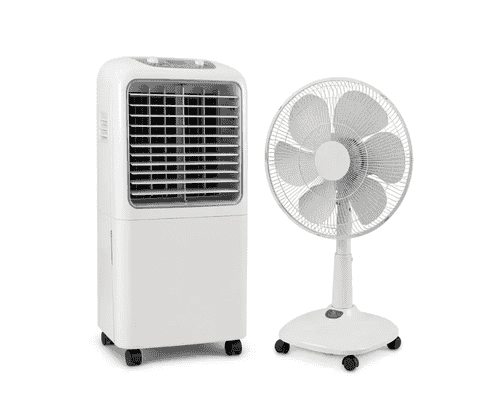
Summer is here, and so is the eternal question that pops up in almost every household: should I buy an air cooler or just stick with a fan? With rising temperatures and electricity bills to worry about, making the right choice matters more than ever.
This guide breaks down everything you need to know how each device works, which situations they are best suited for, and which one actually gives you value for your money. Whether you are setting up a new home, upgrading your cooling setup, or simply trying to survive the peak summer season without breaking the bank, you have come to the right place.
Understanding the Basics: How Do They Work?
How a Fan Works
A fan is beautifully simple. It spins blades to move air around a room, creating a wind-chill effect on your skin. That breeze does not actually lower the room temperature, it just makes you feel cooler by speeding up the evaporation of sweat. This is why a fan feels useless in a room where no one is sitting directly in front of it.
How an Air Cooler Works
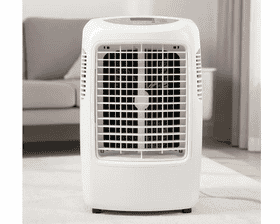
An air cooler also called an evaporative cooler or desert cooler works very differently. It pulls warm air from the room, passes it through water-soaked cooling pads, and then pushes out cool, moist air. This process can drop the surrounding temperature by 5 to 15 degrees Celsius, depending on the humidity in the air and the quality of the cooler.
The key phrase here is "depending on humidity." Air coolers work best in dry, hot climates. In humid coastal regions, their efficiency drops significantly.
Air Cooler vs Fan: A Head-to-Head Comparison
Feature | Air Cooler | Fan |
Cooling Effect | Strong (evaporative) | Mild (air circulation) |
Best Used In | Dry/low humidity areas | Any climate |
Power Consumption | 150–200W | 30–75W |
Water Required | Yes | No |
Humidity Impact | Adds moisture | No change |
Price Range | Higher (₹3,000–₹20,000+) | Lower (₹500–₹5,000+) |
Maintenance | Regular cleaning needed | Minimal |
Portability | Moderate | High |
Noise Level | Moderate | Low to moderate |
Which One Should You Choose? Let's Be Honest
Choose an Air Cooler If...
• You live in a dry, hot region like Rajasthan, Delhi, or parts of Gujarat
• You need actual temperature reduction and not just airflow
• You are cooling a medium to large room (150–400 sq. ft.)
• You want a budget-friendly alternative to AC
• You do not mind refilling water every 6–10 hours
Choose a Fan If...
• You live in a humid region like Mumbai, Chennai, or Kolkata
• You want low maintenance and zero running costs
• You need something portable and lightweight
• You are cooling a small bedroom or personal space
• You are on a tight budget under ₹2,000+
What About Humidity? The Factor Most People Ignore
This is where most buying decisions go wrong. Many people invest in a top-of-the-line air cooler and then feel disappointed because it does not work as expected. The reason is almost always humidity.
Air coolers add moisture to the air as part of the cooling process. In a place where the air is already heavy with moisture, think of Mumbai in June an air cooler will make the room feel stuffy and uncomfortable. You will end up feeling like you are sitting inside a steamy bathroom.
Fans, on the other hand, work equally well in all climates. They do not interfere with humidity levels at all. If you are unsure about your city's humidity levels, a simple humidity meter (hygrometer) costs under ₹500 and can save you from making a costly mistake.
Best Air Coolers to Consider This Summer Season
If you have decided that an air cooler is the right choice for your home, here are the types worth exploring based on room size and budget:
1. Personal / Tower Air Coolers (Small Rooms)
Ideal for bedrooms up to 150 sq. ft. These are compact, energy-efficient, and easy to move around. Brands like Symphony, Bajaj, and Crompton offer reliable options in the ₹5,000–₹10,000+ range with features like auto-fill, honeycomb pads, and remote control.
2. Desert Air Coolers (Larger Rooms & Halls)
Designed for rooms between 200 and 400 sq. ft., desert coolers come with large water tanks (40–80 litres) and powerful motors. These are the best coolers for the summer season if you need to cool an entire living room or open hall. Budget: ₹8,000–₹20,000+.
3. Window Air Coolers
Mounted in windows like an AC, these are great for permanent installations. They are more powerful but less portable. Good option for families in dry-climate zones who want a set-and-forget solution.
Best Fans to Consider This Summer
Fans have come a long way from the basic three-blade ceiling fans of the past. Here is what the market offers today:
BLDC Ceiling Fans
Brushless DC motor fans consume 65–70% less electricity than conventional fans while spinning faster and quieter. Brands like Atomberg, Bajaj, and Havells have strong BLDC models ranging from ₹2,500 to ₹6,000+. If you run a fan for 8 hours daily, a BLDC fan can save you ₹1,500–₹2,000 a year on electricity.
High-Speed Pedestal / Tower Fans
For rooms where a ceiling fan is not practical, a good pedestal fan from brands like Usha, V-Guard, delivers strong airflow. Tower fans are quieter and look modern, a good pick for bedrooms and home offices.
Running Cost Comparison: Fan vs Air Cooler
Money matters, and this comparison often surprises people:
Device | Avg. Wattage | Monthly Cost (8 hrs/day)* |
Standard Fan | 60–75W | ≈ ₹54–₹67+ |
BLDC Fan | 18–28W | ≈ ₹16–₹25+ |
Air Cooler | 150–200W | ≈ ₹135–₹180+ |
Window/Split AC | 1,000–1,500W | ≈ ₹900–₹1,350+ |
The table above puts things in perspective. An air cooler costs significantly more to run than a fan, but it still costs a fraction of what an AC would. If you are on the fence between an AC and an air cooler, the air cooler wins hands down on running cost as long as your climate supports it.
The Verdict: Air Cooler or Fan — Which is Best?
There is no single correct answer here, and anyone who tells you otherwise is oversimplifying. The right choice depends entirely on where you live and what you need.
If you live in North or Central India: Go with a good air cooler. The dry heat is exactly what evaporative cooling is made for. Pair it with a ceiling fan to distribute the cool air evenly, and you have a near-AC experience at a fraction of the cost.
If you live in coastal or humid India: A fan, especially an energy-efficient BLDC fan is your best bet. Spending money on an air cooler in a humid climate is money wasted.
If you have an AC: Use a BLDC ceiling fan alongside it. Running both at the same time lets you raise the AC thermostat by 3–4 degrees without feeling the difference which cuts your electricity bill significantly.
Frequently Asked Questions
Q: Can I use an air cooler and a fan together?
Absolutely, and it is actually recommended. A ceiling fan helps distribute the cool air from an air cooler more evenly across the room, making the cooling more effective. Just make sure there is some ventilation in the room so the added humidity can escape.
Q: Is an air cooler better than a fan for sleeping?
In dry climates, yes. An air cooler keeps the temperature lower through the night without the noise of an AC. In humid conditions, a fan is better for sleeping as it does not add extra moisture to the air.
Q: Do air coolers consume a lot of electricity?
Compared to an AC, not at all. A standard air cooler uses 150–200W, while an inverter AC uses 700–1,200W. Over a summer month with 8 hours of daily use, an air cooler would cost you roughly ₹135–₹180 in electricity — versus ₹600–₹1,000+ for an AC.
Q: Which fan is best for summer in hot Indian climates?
A BLDC ceiling fan combined with an air cooler is the ideal setup for hot, dry Indian summers. If you only want a fan, a high-speed pedestal or tower fan from Atomberg, Orient, or Havells will serve you well.
Also Read: https://www.myg.in/blog/genera...
Final Thoughts
Summer cooling does not have to mean expensive AC bills or uncomfortable heat. The air cooler vs fan debate ultimately comes down to your local climate, your room size, and your budget. Both are practical, affordable options. The key is knowing which one works best in your specific situation.
If you are in a dry climate and need genuine cooling on a budget, invest in one of the best air coolers for your room size. If portability, simplicity, and zero maintenance are your priorities or if you live somewhere humid a quality fan will do the job without any fuss.
Do not overbuy and do not underbuy. With the comparison above, you now have everything you need to make a confident, informed decision before the peak of summer arrives.
 Earphones